


Against the backdrop of surging global demand for lithium resources driven by the new energy industry, brine lithium extraction, one of the core sources of lithium supply, is undergoing rapid technological evolution that is reshaping the industry landscape. Traditional brine lithium extraction plants, characterized by heavy infrastructure investment, long construction cycles, and rigid process configurations, are increasingly unable to adapt to fast-changing market conditions and complex brine environments. As an industry leader, BICHEM is advancing the industrial application of modular lithium extraction technologies. With advantages such as rapid deployment, lower risk, and strong adaptability across diverse scenarios, modular solutions are redefining both the technological pathway and business logic of brine lithium extraction.
Modular skid-mounted lithium extraction represents a fundamental technological innovation in the field. At its core, it replaces conventional on-site, full-process plant construction with a model based on factory-prefabricated standardized process modules combined with rapid on-site assembly. This approach reconstructs the entire value chain, from process design and equipment manufacturing to field deployment, while leveraging standardization, flexibility, and efficiency to deliver lifecycle value enhancement for lithium resource developers.
Unlike traditional lithium extraction systems, which are fixed, site-built, and capital-intensive, modular skid-mounted solutions are standardized, integrated, flexible, and controllable, enabling breakthroughs in technical bottlenecks and maximizing commercial value. Key features include:
1. Standardized process units with unified interfaces: The full lithium extraction process is divided into independent core units, including pretreatment, adsorption, membrane separation, concentration, and refining. Each unit is prefabricated in a factory as an integrated skid-mounted module in accordance with industry standards. Modules adopt unified connection interfaces, eliminating customization barriers and enabling rapid "plug-and-play" assembly.
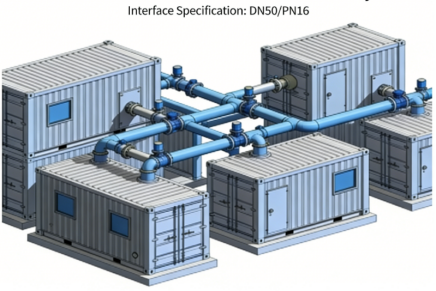
Modular skid-mounted interface
2. Functional completeness and operational independence: Each module is equipped with a complete process control system, supporting equipment, and maintenance access, allowing it to operate independently without reliance on external auxiliary systems. Once assembled on-site, only pipeline connection and system commissioning are required before automated operation under centralized control can begin.
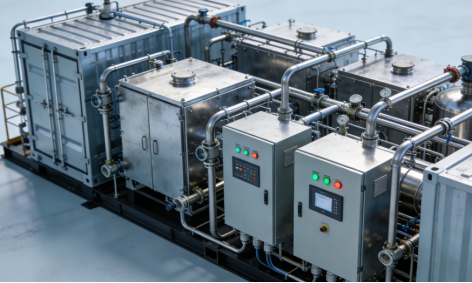
PLC cabinets and other lithium extraction equipment
3. Factory-based manufacturing and simplified construction: Core equipment and process modules are manufactured, tested, and pre-commissioned in specialized factories. On-site work is limited to site preparation, module placement, and pipeline connection, eliminating the need for large-scale civil construction, on-site equipment fabrication, and extensive commissioning typical of conventional plants.
4. Configurable solutions tailored to specific scenarios: Based on standardized modules, configurations and process parameters can be rapidly adjusted according to brine composition (lithium concentration and impurity ratios), resource reserves, and site conditions (altitude, water availability, and infrastructure). This enables customized "one brine, one solution" deployment
5. Asset mobility and high reusability: The modular system features a detachable design without dependence on fixed civil infrastructure. It can be dismantled, transported, and redeployed to new sites as resource development progresses or resources are depleted, significantly improving asset utilization.
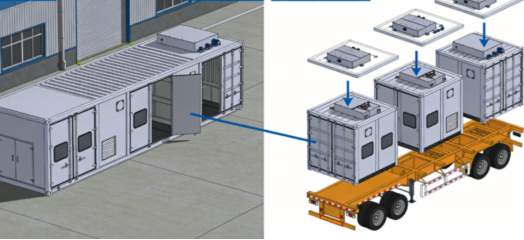
Modular skid-mounted system mobility
From a process perspective, modular skid-mounted systems demonstrate advantages in integrating advanced technologies, adapting to complex operating conditions, and optimizing resource utilization, with targeted improvements addressing the limitations of conventional processes:
1. Integration of advanced DLE technologies: By replacing inefficient evaporation and crystallization methods, modular systems integrate advanced Direct Lithium Extraction (DLE) processes such as selective adsorption and membrane separation. These enable precise separation of lithium ions from impurities such as sodium and magnesium, achieving lithium recovery rates exceeding 95% and effectively addressing challenges associated with South American brines.
2. Fully enclosed process design: The entire system operates in a closed-loop manner, eliminating the need for large evaporation ponds. Brine is processed entirely within the modules, reducing water loss and contamination at the source while minimizing environmental impact.
3. Low water and energy consumption: Through equipment integration and process optimization, modular systems significantly reduce water and energy consumption, making them well-suited to high-altitude, arid regions while lowering operating costs.
4. High-precision process control: Prefabricated modules are equipped with standardized control systems that enable precise parameter regulation, such as adsorption time, membrane pressure, and concentration levels, avoiding inconsistencies associated with on-site construction and ensuring stable lithium recovery rates and product quality.
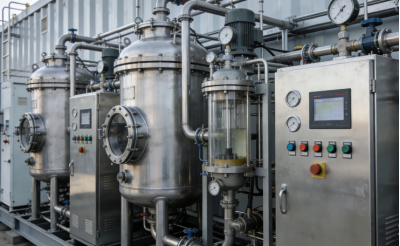
Instruments of modular skid-mounted systems
Leveraging these technical and industrial advantages, modular skid-mounted solutions optimize multiple stages of lithium resource project development, including construction, investment risk, operating cost, and market deployment:
1. Project construction: Deployment timelines can be significantly shortened, with overall project cycles reduced to 12-18 months and even 6-9 months for highly standardized projects, enabling rapid capacity realization.
2. Project investment and risk mitigation: Modular skid-mounted systems eliminate the need for large-scale civil construction, reducing initial capital expenditure by 30%-50%. Standardized factory prefabrication further lowers equipment failure rates and energy consumption, thereby reducing operating costs, shortening payback periods, and significantly improving capital turnover efficiency. In addition, leveraging their modular nature, enterprises can procure and deploy modules in phases based on brine resource reserves, lithium price fluctuations, and their own financial capacity, effectively mitigating market risks and enabling asset-light operations.
3. Market deployment: Modular technologies overcome geographical and operational constraints, unlocking development potential for small-scale and low-grade brine resources. This enhances flexibility and economic viability, enabling companies to expand globally with lower investment thresholds.
BICHEM leads the transformation of brine lithium extraction
As a leader in modular lithium extraction technologies, BICHEM remains committed to the principle of “one brine, one solution”. Drawing on deep insights into global brine resource characteristics, particularly the complex conditions in South America, and aligning with customers' specific needs, we have developed modular solutions that integrate efficiency, flexibility, environmental sustainability, and cost-effectiveness. These solutions not only standardize and industrialize lithium extraction processes but also continuously improve lithium recovery rates while reducing water and energy consumption through ongoing technological innovation. BICHEM’s modular lithium extraction technologies have already been successfully deployed in multiple brine projects in South America. We firmly believe that modular solutions will gradually replace traditional lithium extraction plants and become the mainstream technological pathway in the industry. Looking ahead, BICHEM will continue to prioritize customer needs and drive innovation, delivering more efficient, reliable, and competitive lithium extraction solutions to global developers, and supporting the sustainable and high-quality development of the new energy industry.
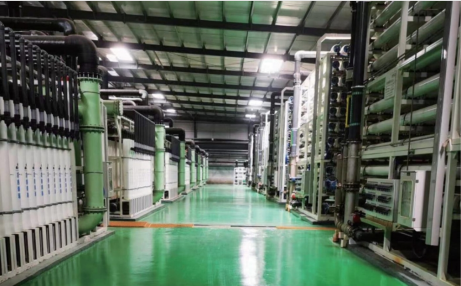
BICHEM’s membrane separation skid workshop
